

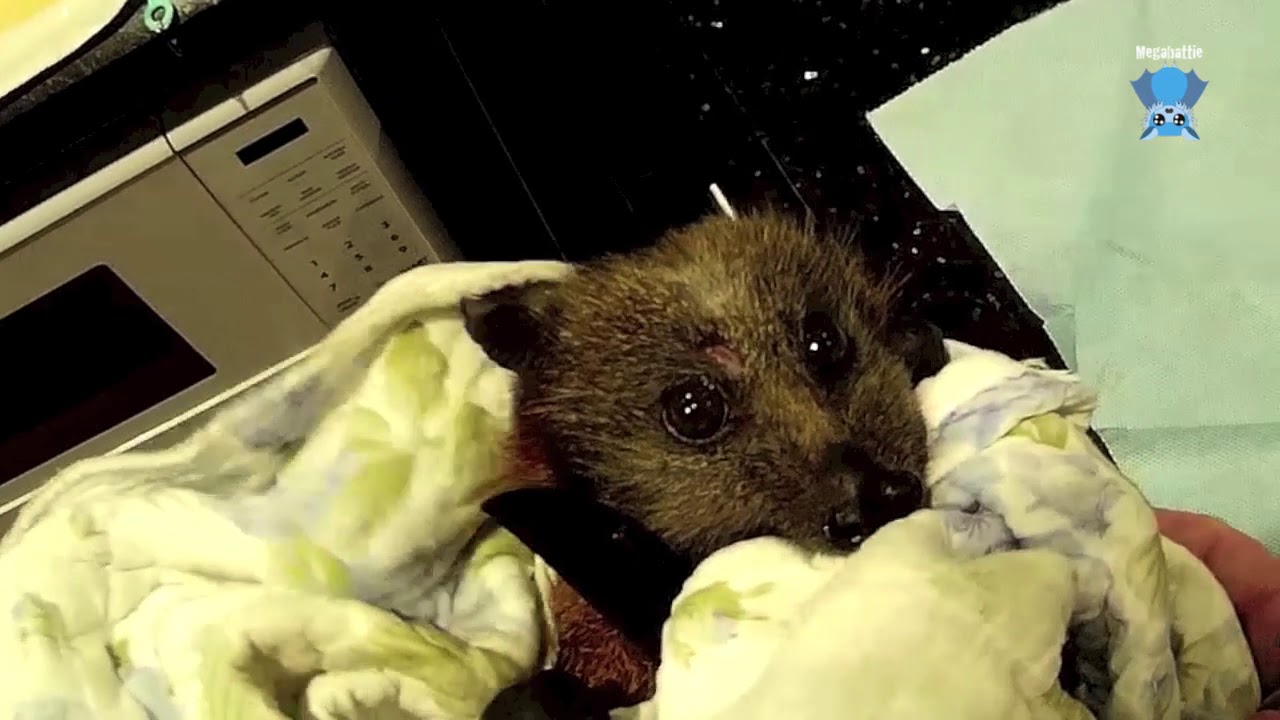
 Gordie is an adult male Grey-Headed Flying-Fox who was found beside a busy road and scooped up by a Member of Public, who was scratched while handling the bat.
 He said he was vaccinated, but this wasn't entirely true.
The health department wanted Gordie to be euthanased and sent off for testing.
Gordie initially was cranky but quite alert, but over the next 48 hours his condition deteriorated. He died just before the Health Dept asked for his body.
Since Gordie died of his own accord, at least I didn't have to euthanase a healthy bat for having scratched someone. It's small comfort, but his fate was a natural result of his accident, rather than something I had to do.
I really dislike rescues where someone has been bitten or scratched.
Bats who bite or scratch a human are euthanased and sent off for testing because the virus (if present) lives in the bat's brain.
Gordie's body was sent off for testing. It came back negative.
Australian Bat Lyssavirus.
You can only catch it if you’re bitten or scratched by an infected bat. Less than 1% of the population may have the virus at any given time but the percentage of bats sent off for testing who prove positive, is about 7% positive, which is because the only time we send off a bat for testing is if it's bitten or scratched someone, or if we think there is something wrong with it neurologically. We are more likely than the stats (less than 1%) to rescue a bat who tests positive, because bats with nothing wrong with them don't come into contact with humans but stay in their colonies high up in trees during the day. If it's on the ground, there is a problem. It may be accident or it may be infected.
This virus kills the bat in a relatively short period of time.
In order for the virus to be transmitted, the bat has to be sick at the time of the bite or scratch. It has to be actively shedding the virus from its brain at the time of the bite or scratch. The virus has to be present in the saliva at the time. The virus has to come into contact with a nerve ending through a bite or scratch. If the bat has licked its claw in the previous half hour, the virus could be present and still living on the bat’s claw. The virus isn’t spread via blood or into your blood. It is spread if it contacts a nerve ending.
If you live in Australia and are bitten or scratched, the health department will vaccinate you for free. The bat will be euthanased and sent off for testing. If it comes back negative, the vaccinations will cease.
The vaccination appears to be preventative.
All carers and rescuers are required to be vaccinated and to have current titres (blood test showing immunity level) provided yearly to show continued immunity.
I rescue maybe 100-300 bats a year. I have seen 3 cases in all my rescues over 12 years, and I could ID each of them as being "wrong". I wasn’t positive they were infected, I could just see they were very wrong.


0 Comments